


Research on Physics and Cognition

How do thought, perception, language, and consciousness arise? These questions are among the oldest and most challenging problems in science. Although modern neuroscience and artificial intelligence have made enormous strides, it is still not fully understood why certain physical systems develop cognitive abilities in the first place. Why are billions of neurons able to work together to understand language, store memories, or make complex decisions? And why are similar capabilities increasingly emerging in artificial neural networks as well?
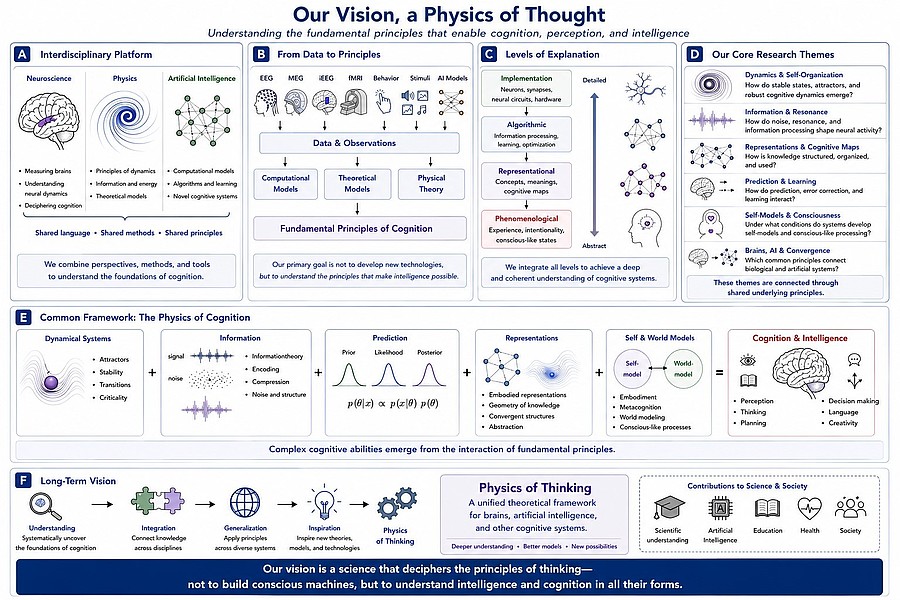
The “Physics and Cognition” research group (Group Leader: PD Dr. Patrick Krauss) at the Mannheim Center for Neuromodulation and Neuroprosthetics (MCNN, Director: Prof. Thomas Kinfe) within the Department of Neurosurgery (Director: Prof. Nima Etminan) addresses these fundamental questions. Our research combines neuroscience, physics, and artificial intelligence. In doing so, we view the brain not merely as a biological organ, but as a complex dynamic system whose behavior can be described by general principles. Our goal is to understand the fundamental laws that enable cognition in biological and artificial systems.
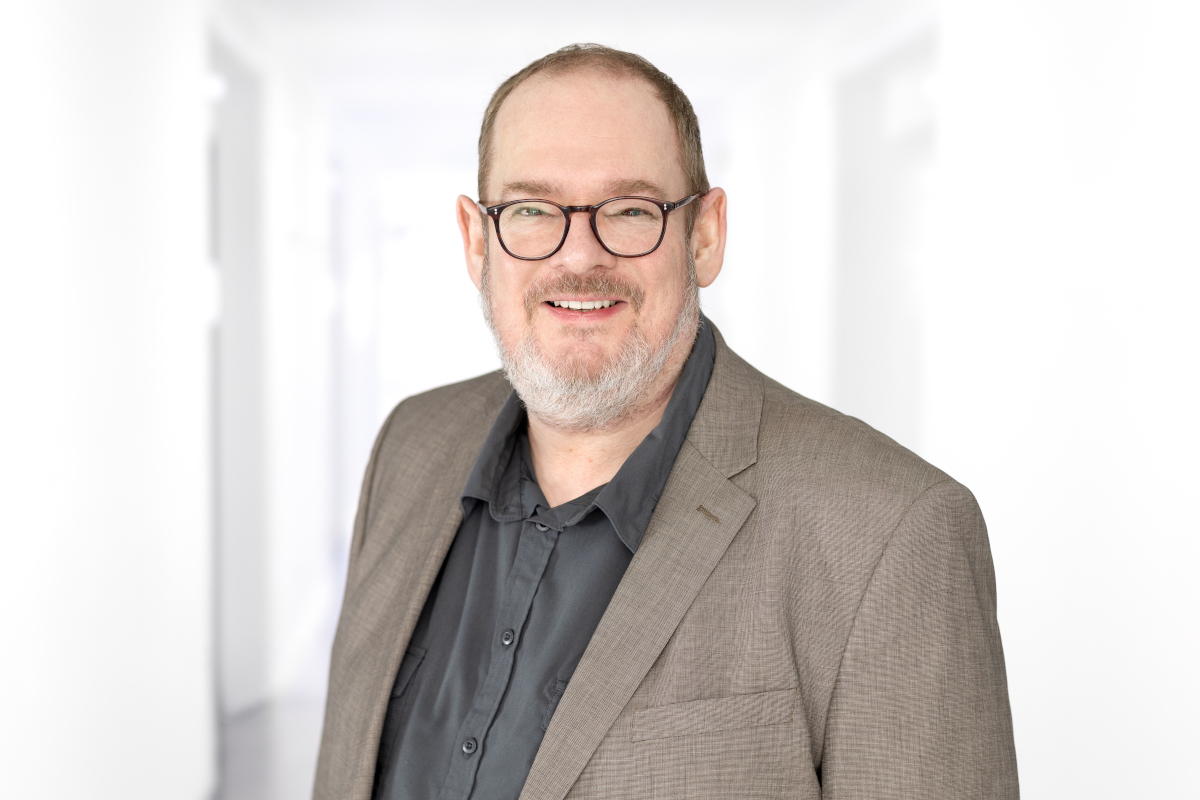
PD Dr. rer. nat. Patrick Krauss
Kognitionswissenschaftler
Group Leader
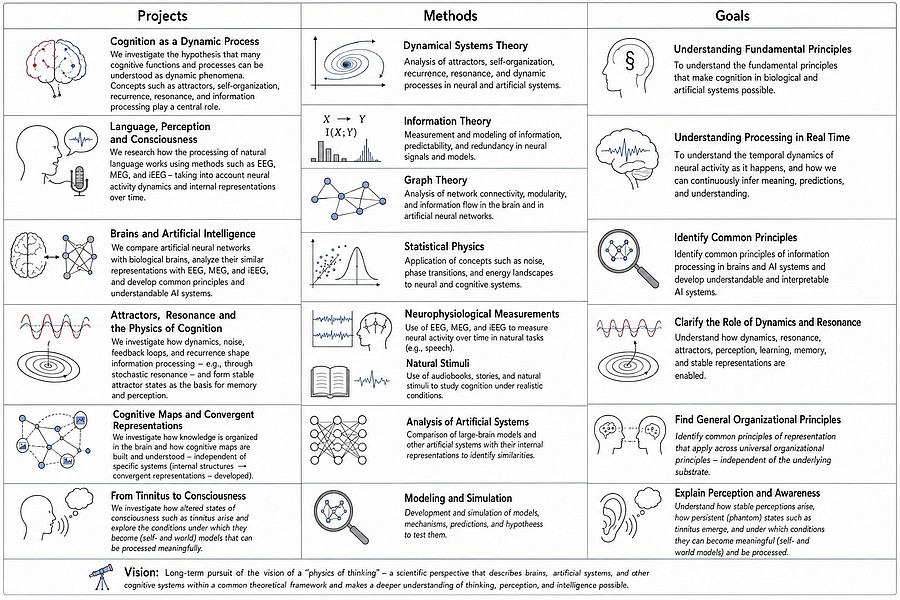
In everyday life, thinking often appears to be something intangible or abstract. From a scientific perspective, however, cognition is based on physical processes. Billions of neurons exchange electrical signals, forming highly complex networks. Similar networks can also be found today in modern AI systems.
We investigate the hypothesis that many cognitive functions can be understood as dynamic processes. Concepts such as attractors, self-organization, recurrence, resonance phenomena, and information processing play a central role in this context. Just as planetary orbits, weather phenomena, or ecosystems can be described by general mathematical principles, cognition too could be based on universal physical laws.
Our research employs methods from dynamical systems theory, information theory, graph theory, and statistical physics to identify such principles. This yields a perspective that views biological and artificial intelligence within a common theoretical framework.
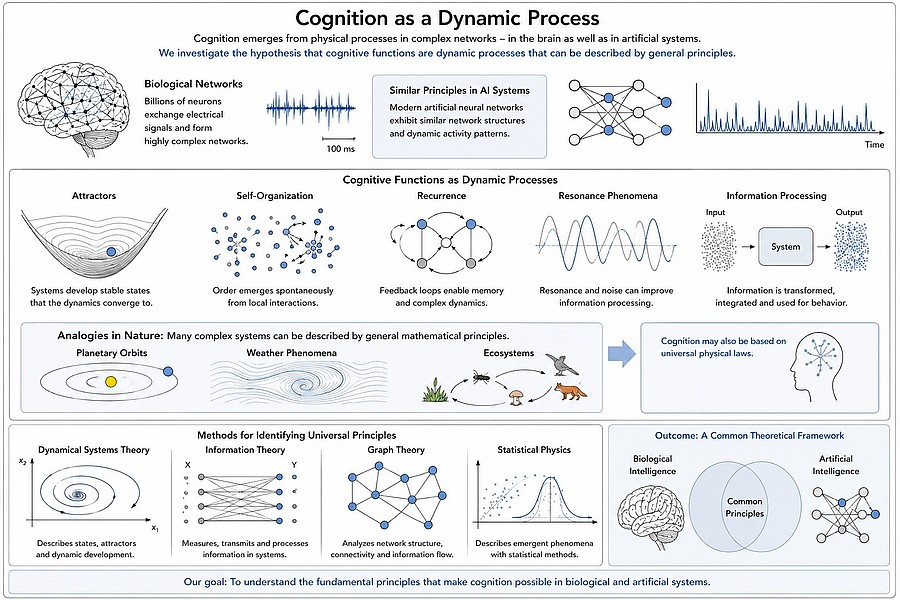
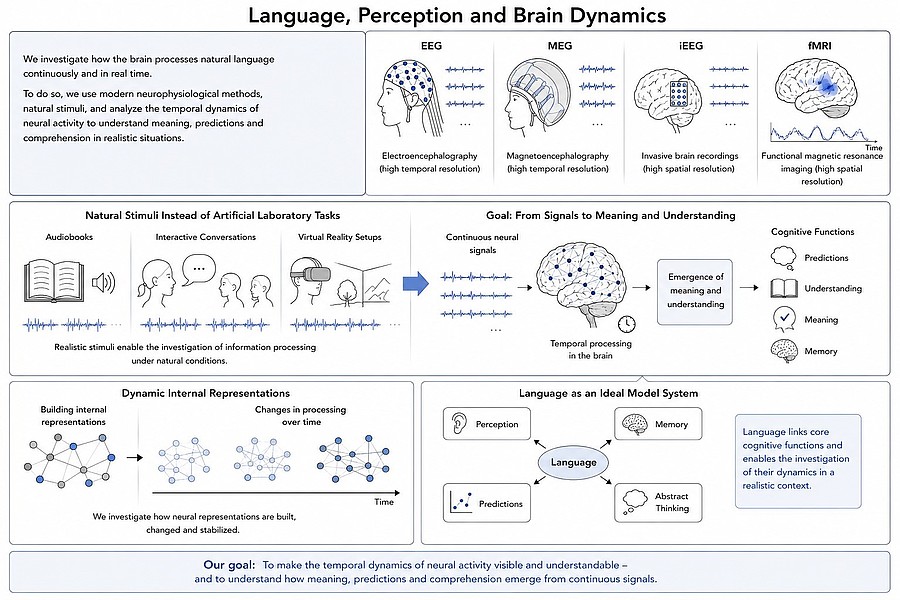
A key focus of our empirical research is the processing of natural language. The human brain does not process language word by word in isolation, but rather continuously and in real time. To investigate these processes, we use methods such as electroencephalography (EEG), magnetoencephalography (MEG), invasive EEG (iEEG), and functional magnetic resonance imaging (fMRI).
Unlike traditional laboratory experiments, we frequently use natural stimuli such as audiobooks or coherent narratives. This allows us to investigate how the brain processes information under realistic conditions. Our goal is to visualize the temporal dynamics of neural activity and to better understand how meaning, predictions, and comprehension emerge from continuous signals.
We are particularly interested in the question of how internal representations are constructed and how they change over the course of processing. Language serves as an ideal model system for this, as it integrates perception, memory, prediction, and abstract thinking.
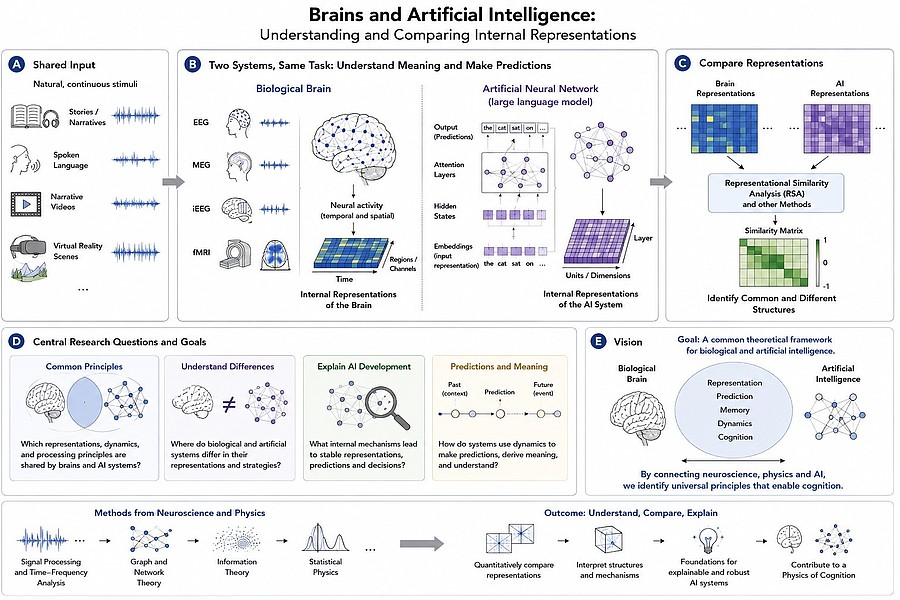
Modern language models and other AI systems demonstrate capabilities that were considered exclusively human just a few years ago. At the same time, it remains largely unclear how these systems function internally. That is why we compare artificial neural networks directly with biological brains.
To do this, we analyze the activity of large language models and compare their internal representations with measurements from EEG, MEG, iEEG, or fMRI. In this way, we investigate which principles of biological and artificial information processing are shared and what differences exist.
A key goal is to develop explainable and transparent AI systems. Using methods from neuroscience and physics, we aim to reveal the hidden structures of artificial networks and better understand how stable representations, predictions, and decisions emerge.
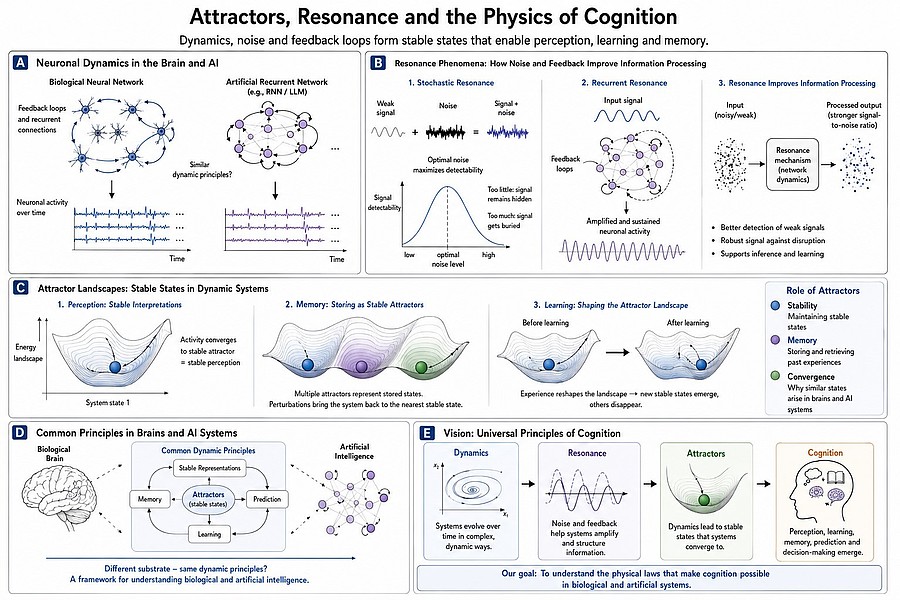
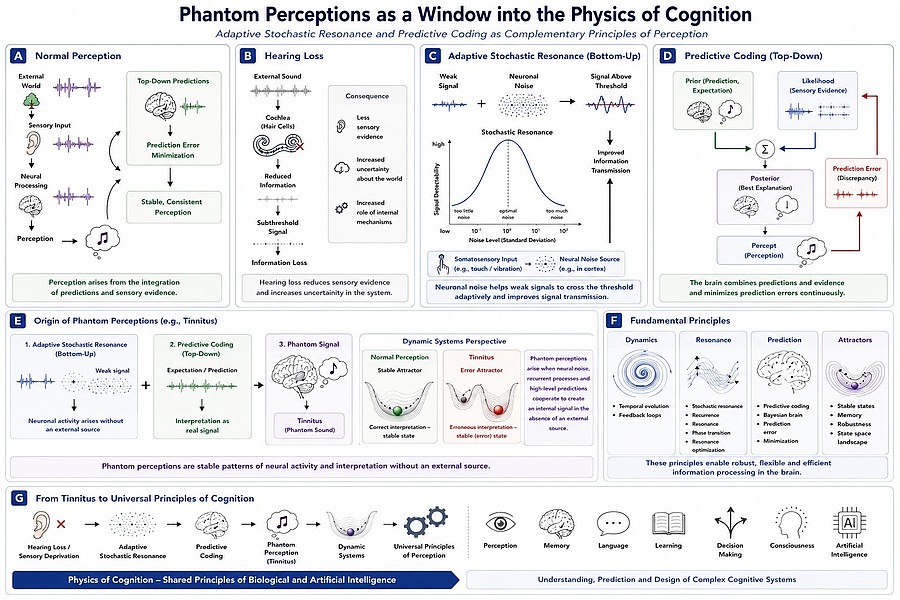
A particular focus of our research is the role of dynamics and resonance in neural systems. Many biological systems benefit from noise, feedback, and recurrent connections. Contrary to the intuitive assumption that noise is inherently disruptive, it can actually improve information processing under certain conditions.
We investigate various resonance phenomena in biological and artificial neural networks, including stochastic resonance, recurrent resonance, and related mechanisms. Such processes could play an important role in perception, learning, and memory.
In addition, we investigate the emergence of stable attractor states. Attractors describe states to which dynamic systems preferentially return. They could explain how memories are stored, how perceptions remain stable, or why similar representations arise independently in different brains and AI systems.
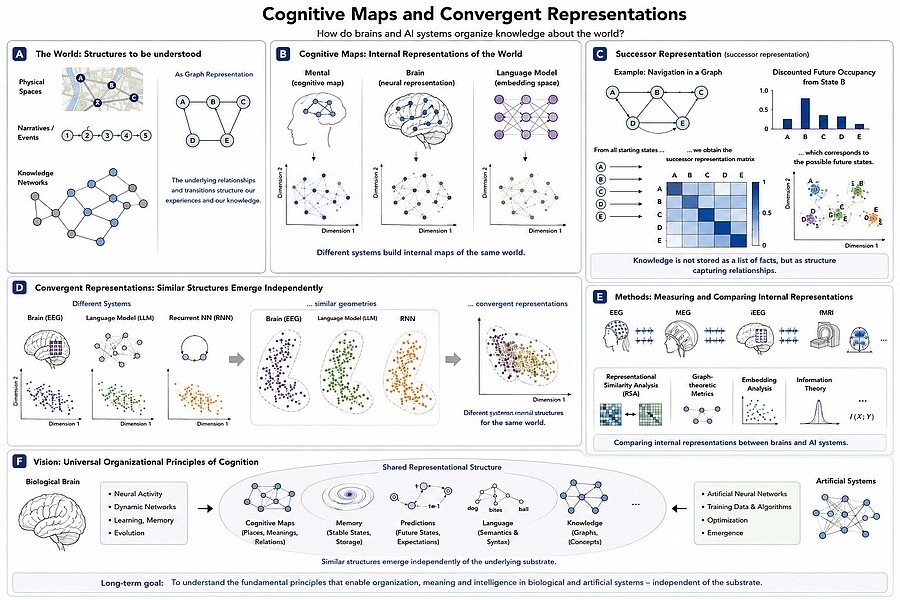
Another area of research focuses on the question of how knowledge is organized. Humans navigate not only through physical spaces, but also through spaces of meaning, memories, and linguistic structures. To describe such processes, we use concepts such as cognitive maps and successor representations.
We are particularly interested in whether different systems independently develop similar internal structures. Initial findings from brain research and AI suggest that certain representations may arise repeatedly. We refer to such phenomena as convergent representations.
In the long term, we aim to understand whether these observations are underpinned by general organizational principles that are independent of the respective biological or technical substrate.
In addition to normal cognition, we also investigate altered states of perception. One example is phantom perception, such as tinnitus, in which people perceive sounds even though no external sound source is present. Our research combines neurobiological, information-theoretical, and neurocomputational models to understand how such phantom perceptions arise. Within the framework of predictive coding, they can be interpreted as the result of misaligned prediction processes; from the perspective of dynamical systems, they correspond to stable but erroneous attractor states. Such phenomena provide important insights into how the brain constructs and maintains perceptions.
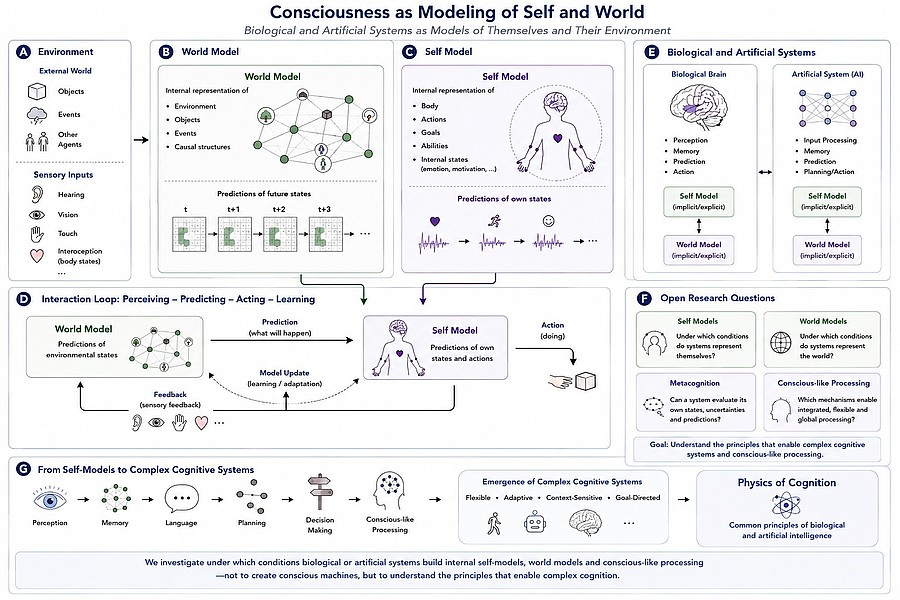
In addition, we explore fundamental questions about consciousness. In doing so, we investigate the conditions under which biological or artificial systems might develop internal self-models, world models, and consciousness-like forms of processing. Our goal is not to develop “conscious machines”, but rather to gain a better understanding of the principles that give rise to complex cognitive systems.
The “Physics and Cognition” research group sees itself as an interdisciplinary platform at the intersection of neuroscience, physics, and artificial intelligence. While other research groups primarily develop new technologies or medical applications, we focus on the fundamental principles that make cognition possible in the first place.
In the long term, we pursue the vision of a “physics of thought”—a scientific perspective that describes brains, artificial intelligence, and other cognitive systems within a common theoretical framework. By combining empirical brain research, computer-based models, and physical theory, we aim to contribute to a deeper understanding of thought, perception, and intelligence.